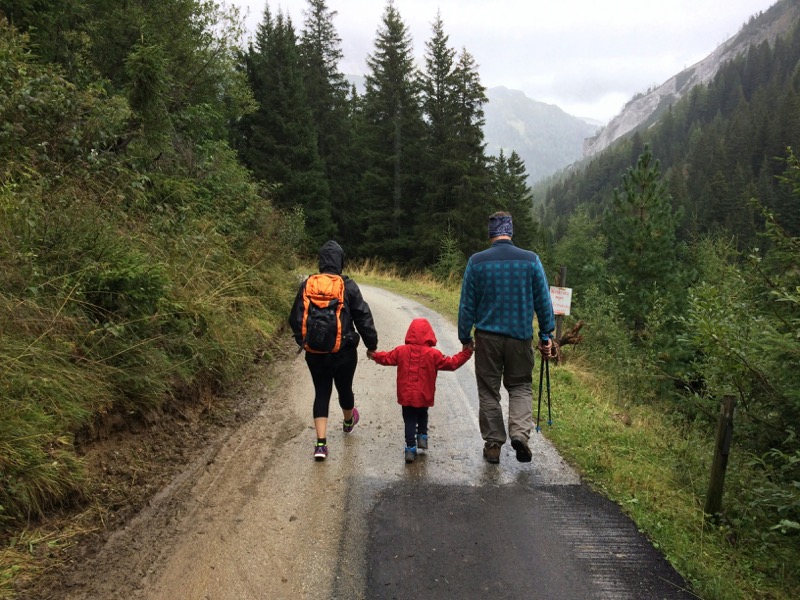
Getting Active as a Family
Moving together as a family keeps kids active. Here are some ideas to make it work.
Getting active as a family is one of those things that sounds like an obvious win — and, on the evidence, it mostly is. Children who move more have better cardiovascular health, stronger bones and muscles, and a lower risk of chronic disease. Families that exercise together do seem to nudge those numbers in the right direction. The research isn’t quite as dramatic as some headlines suggest, but the direction of travel is clear and the practical bar is low.
Key takeaways
- Regular physical activity is consistently linked to better cardiovascular, bone, and muscle health in children and young people — this is well-established consensus, not a fringe finding.
- Family-centred activity programmes make a measurable difference to how much children move: about five extra minutes of moderate-to-vigorous activity per day on average. Modest, but real.
- For teenagers, families that talk openly and get along well tend to have more active adolescents — a small but consistent finding from a 2025 systematic review.
- WHO guidelines recommend children aged 5–17 include muscle- and bone-strengthening activity at least three times a week, alongside their aerobic exercise.
- The mental health and cognitive benefits of exercise in children are real but less settled than the physical ones — “strong and growing evidence” is a fair description; “proven fact” is a stretch.
Why it matters
The physical health benefits of activity in children are among the most robust findings in paediatric health research. A 2024 review in Frontiers in Public Health, drawing on guidelines from the WHO, the US, UK, Australia, Canada, and China, found consistent evidence that physically active children have better cardiovascular fitness, stronger bones and muscles, and a lower risk of developing chronic disease in later life.
The mental health picture is more nuanced. There’s genuine evidence pointing in a positive direction — active children tend to report better mood and wellbeing — but a 2025 systematic review noted that effects on cognitive function in adolescents “remain inconsistent,” with some methodologically rigorous trials failing to find the effect. This doesn’t mean exercise is bad for young minds; it means we shouldn’t oversell it. If your child runs around and sleeps better, that’s real. Just don’t stake everything on an unproven cognitive boost.
What family activity actually achieves
A July 2025 meta-analysis of ten randomised controlled trials, involving over 1,500 parent-child pairs, looked specifically at family-centred physical activity programmes. The finding: children in these programmes accumulated about five extra minutes of moderate-to-vigorous physical activity per day compared to control groups — a statistically significant improvement, though the researchers noted the effect was most pronounced in shorter programmes and at weekends rather than consistently across all time periods.
Five minutes sounds small. In context, it matters: most children in rich countries are already below recommended activity levels, and consistent small additions stack up. The headline isn’t “transform your child’s health by doing yoga together on Saturday”; it’s “families that move together do seem to help their children move more, and every bit counts.”
The family communication finding
A separate 2025 systematic review, covering 43 studies and published in the International Journal of Behavioral Nutrition and Physical Activity, looked at the relationship between family functioning and children’s physical activity across different age groups.
For teenagers aged 13–17, the finding was clear: good family communication was positively associated with higher physical activity levels (a correlation of 0.17 — small but consistent across studies). Family conflict showed a small negative association. For children aged 5–12, the association was much less clear — the researchers classified it as “statistically indeterminate.”
Important caveat: the vast majority of these studies were observational (over 80% cross-sectional), which means we can describe an association but can’t be certain which direction causality runs. It’s possible that families who communicate well tend to do more together, including physical activity. It’s also possible that active families develop better communication. It’s probably both.
What we can say: if you have a teenager, an open, low-conflict home environment is associated with them being more active. That’s useful to know.
What the WHO actually recommends
The WHO 2020 Guidelines on Physical Activity and Sedentary Behaviour (the most recent international standard) recommend:
- Children and adolescents aged 5–17 should include vigorous-intensity aerobic activity, plus activities that strengthen muscle and bone, at least three times per week as part of their overall physical activity.
The specific “60 minutes per day” figure you may have seen is sometimes quoted without the full context — individual national guidelines vary slightly, and the WHO recommendations are more nuanced than a single daily target. The three-times-a-week muscle and bone guideline is clearly stated and well-evidenced (rated a “strong recommendation” by the WHO).
In practice, for families, this translates to something like: active play, sports, running, and jumping on most days; with a deliberate focus on things like climbing, cycling, dancing, or jumping at least three times a week.
What “getting active together” can look like
The good news about family activity is that the bar isn’t high. The interventions that showed positive effects in the 2025 meta-analysis weren’t gym memberships or athletic programmes — they were structured family activity interventions, typically involving planned walks, active games, and organised weekend activities. A few practical ideas:
Everyday movement:
- Walking to school or to errands instead of driving where possible
- Active commuting — cycling, scooting — where safe
- After-dinner walks, even short ones
Weekend anchors:
- A regular Saturday or Sunday activity that involves moving: a park walk, a swim, a bike ride, a family football kickabout
- Playgrounds and open spaces — children need unstructured time to run, jump, and climb, not just structured sport
Muscle and bone specifically:
- Climbing frames and adventure playgrounds
- Dance (surprisingly good for bone health)
- Any activity involving jumping, running, or carrying
- Older children: hiking, cycling, swimming
For teenagers:
- Less about “family exercise” and more about supporting whatever activity they’re independently motivated by
- The research finding on family communication suggests that being interested, supportive, and not conflictual matters more than doing the activity together at this age
A note on what we don’t yet know
Some of the most-cited claims about family activity didn’t survive adversarial fact-checking when we researched this piece. Family meals improving happiness across cultures (a 2024 study) failed independent verification. Large, specific claims about nature-based interventions producing dramatic resilience gains mostly couldn’t be replicated. We’ve stuck to what we can cite with confidence.
The honest picture is encouraging without being miraculous: families that move together tend to produce children who move more, and moving more is genuinely good for children’s health. That’s worth holding onto.
Further reading
- WHO 2020 Physical Activity Guidelines — the primary reference for physical activity recommendations, available via the WHO website
- NHS: Physical activity guidelines for children and young people — the UK-specific application of these guidelines (nhs.uk); in the US, the equivalent is the Physical Activity Guidelines for Americans from the Department of Health and Human Services; in Australia, the Australian 24-Hour Movement Guidelines
- Sport England: Active Lives Children and Young People Survey — annual data on activity levels by age and context in England